Choosing 1, 2 or 3 bedrooms: start from how you will live in five years
Clear area, household size and long-term cost — three variables to compare before choosing a unit code.
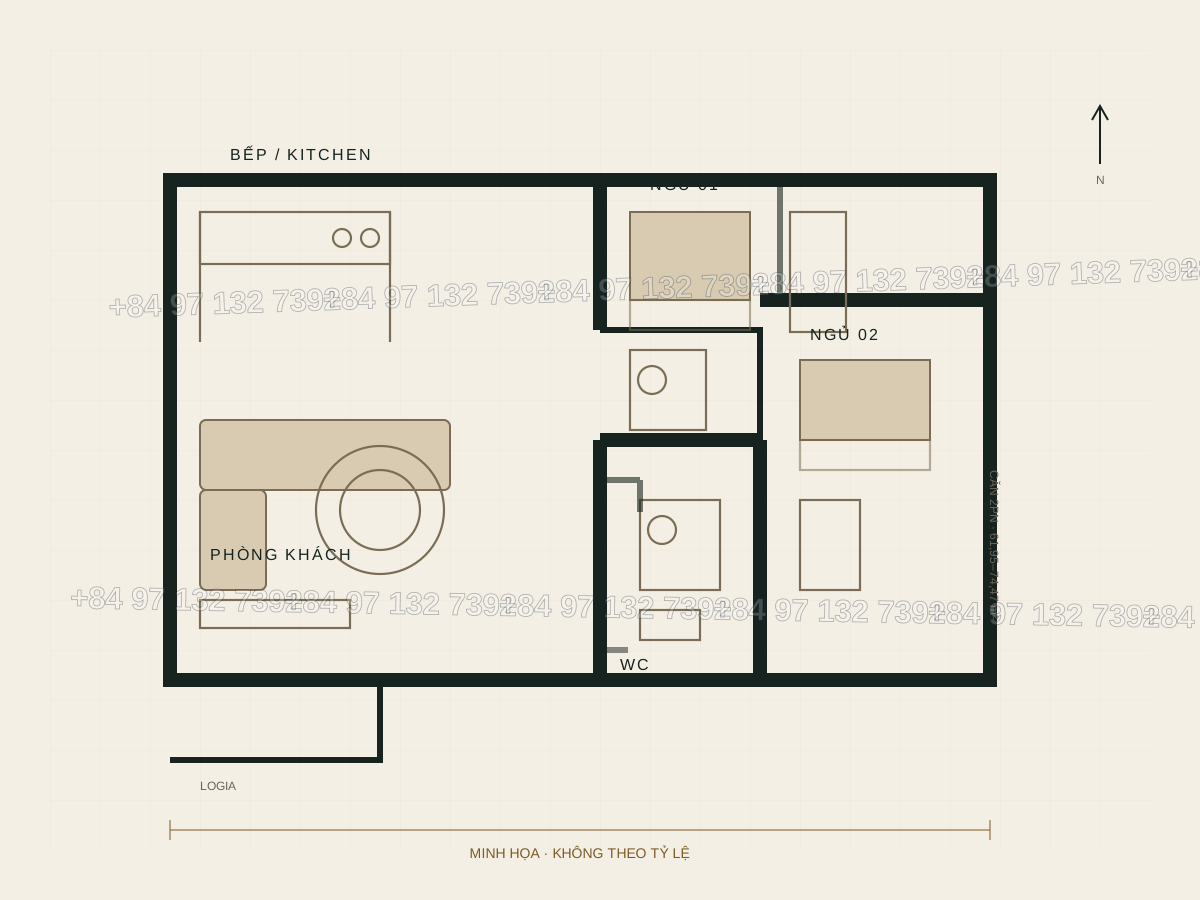
Choosing an apartment size at Capital Square should start with household size, working-from-home needs and budget — not with a brochure headline. The published formats are 1-bedroom, 2-bedroom, 2-bedroom plus one and 3-bedroom. Unit-level areas must come from the sales list for the specific tower.
This guide compares the four formats by use case. It does not replace a floor plan with dimensions, the sales list or legal advice.
Match the format to the household
A one-bedroom home suits a single buyer or a couple without children. It is compact and cheaper to run, but storage and guest space are limited. A two-bedroom home suits a small family or a couple needing a study. A 2-bedroom plus one adds a flexible room, but the actual usefulness of that room depends on its shape, light and access.
A three-bedroom home suits a larger household or buyers who need a generous living area. The purchase price, furniture and management cost are usually higher. Do not choose a larger unit only as an investment guess if the household does not need it.
| Need | Start with | Check |
|---|---|---|
| Single person or couple | 1-bedroom | Storage, kitchen, parking |
| Family with one child | 2-bedroom | Second bedroom, bathrooms, storage |
| Remote work | 2-bedroom or 2+1 | Light, sockets, acoustic separation |
| Multi-generational family | 3-bedroom | Bedrooms, bathrooms, management fee |
Gross area versus net area
Gross area is measured to the centre of shared walls and is usually larger. Net area is the usable space inside the apartment. Using the wrong figure can make a unit feel larger than it is. Ask the sales team which figure appears in the document and whether balconies, loggias or storage are included.
Check function, not only square metres
Living room and kitchen
Check the distance from the kitchen to the dining table, the refrigerator position and door swings. A larger apartment with an awkward kitchen can be less practical than a compact, well-planned one.
Bedrooms
Measure room dimensions to see whether your bed, wardrobe and desk fit. Check window orientation, noise from the corridor and access to bathrooms. In a two-bedroom unit, confirm the second bedroom is usable year-round.
Bathrooms and storage
Number of bathrooms affects daily family life. Check ventilation, waterproofing and washing machine space. Storage is often overlooked but determines how tidy the home feels.
Budget beyond the purchase price
Add furniture, the reference management fee of VND 25,000/m² including VAT, parking, utilities and any borrowing cost. For a larger unit, furniture and running costs usually rise with area. If you plan to rent out, research actual demand and the type of tenant in the area rather than assuming larger always rents faster.
Questions for a show apartment
- Is this a show unit or a real unit?
- What are the dimensions of each room?
- Which walls can be changed?
- What is included in the handover specification?
- How many bathrooms and storage areas are there?
Conclusion
There is no universally best format. Choose the smallest layout that comfortably supports your household, then verify the floor plan and sales list. A well-planned two-bedroom can be a better home than a poorly planned three-bedroom.
Review the apartment overview, master plan and legal checklist. For a unit-specific comparison, contact us.
Build a budget by format
Divide the budget into deposit, loan, purchase costs and running costs. A larger apartment usually needs more furniture, but the increase is not linear. Obtain room-by-room furniture quotes instead of multiplying total area by one unit price.
Running costs include the reference management fee, parking, utilities and maintenance. If you plan to rent the unit, allow for vacancy periods and agent fees. A cheaper purchase price is not automatically a better investment if the unit is hard to rent.
Room-by-room check
Living and kitchen
Check the distance from the kitchen to the dining table, refrigerator position and door swings. Confirm the number of power outlets and the ventilation route.
Bedrooms
Measure whether a bed, wardrobe and desk fit. Check window orientation, corridor noise and bathroom access. In a two-bedroom unit, confirm the second bedroom can be used every day.
Bathrooms and storage
Check ventilation, waterproofing, washing machine space and storage. These details often matter more than a few extra square metres.
Frequently asked questions
Is gross area the same as net area?
No. Gross area is usually larger; ask which figure is used in the contract.
Should I buy the largest unit I can afford?
Not necessarily. Choose the layout that fits your household and budget without unnecessary running costs.
Can I change the layout?
Only within the building rules and with written approval. Confirm which walls are structural.
Practical worksheet
List the furniture you already own and the furniture you would need to buy. Measure the largest item, usually a sofa, bed or dining table, and compare it with the room dimensions. A layout that fits on paper may fail once doors and windows are considered.
Repeat the exercise for storage, washing machine, refrigerator and workspace. If you work from home, check light, ventilation and power outlets during a site visit rather than relying on a rendering.
Finish with a five-year view: will the household grow, will you need a second parking space, and would the running costs remain comfortable?
Independent editorial content based on the project file.